Picture a buyer with two tabs open. One contains a shortlist of software vendors. The other is a pricing page that says little beyond “Talk to sales”. The buyer came looking for a straight answer about cost and fit; the page offers a meeting instead.
The shortlist may now come from an AI assistant, which has prompted a tempting prediction: vendor websites are becoming irrelevant. I think the opposite is more interesting. If a machine can introduce your company, your website has a new job: help a sceptical buyer check whether that introduction was accurate.
The shortlist is not the decision
The case for the disappearing website sounds reasonable. A buyer can ask an assistant for options, narrow them by budget or integration, and get a comparison without opening ten tabs. A vendor that only explains what a category means could easily lose that part of the conversation.
But research does not support the leap from “buyers ask AI” to “buyers no longer check”. In a Wynter study published in November 2026, 72% of 200 B2B buyers who had recently used an AI assistant to research a work purchase said they visited vendor websites afterwards. The sample was screened for AI use, so that is not a figure for all B2B buyers. It does tell us something useful about the people most likely to bypass a website: many still go there.
The assistant gets a vendor onto the page. Then the buyer wants to know whether it actually integrates with their systems, serves companies of their size and operates in their region. That is a different visit from the old “What do you do?” browse. It starts halfway through an evaluation, with less patience for vague answers.
A 16 November report from Informa TechTarget points in a similar direction, though it surveyed a different group: 499 global B2B technology buyers drawn from its own audience. It found that 58% said they often or very often clicked through when AI cited a vendor, while 42% said a citation built trust. Those measures are not a conversion funnel. They do suggest that getting mentioned and being believed are separate problems.
A useful website can say no
Most vendor sites are built to avoid ruling anyone out. Every industry is served. Every team size is welcome. The product somehow does everything, while the practical limits sit in a sales deck. That approach made sense when the goal was to capture an enquiry and qualify it later.
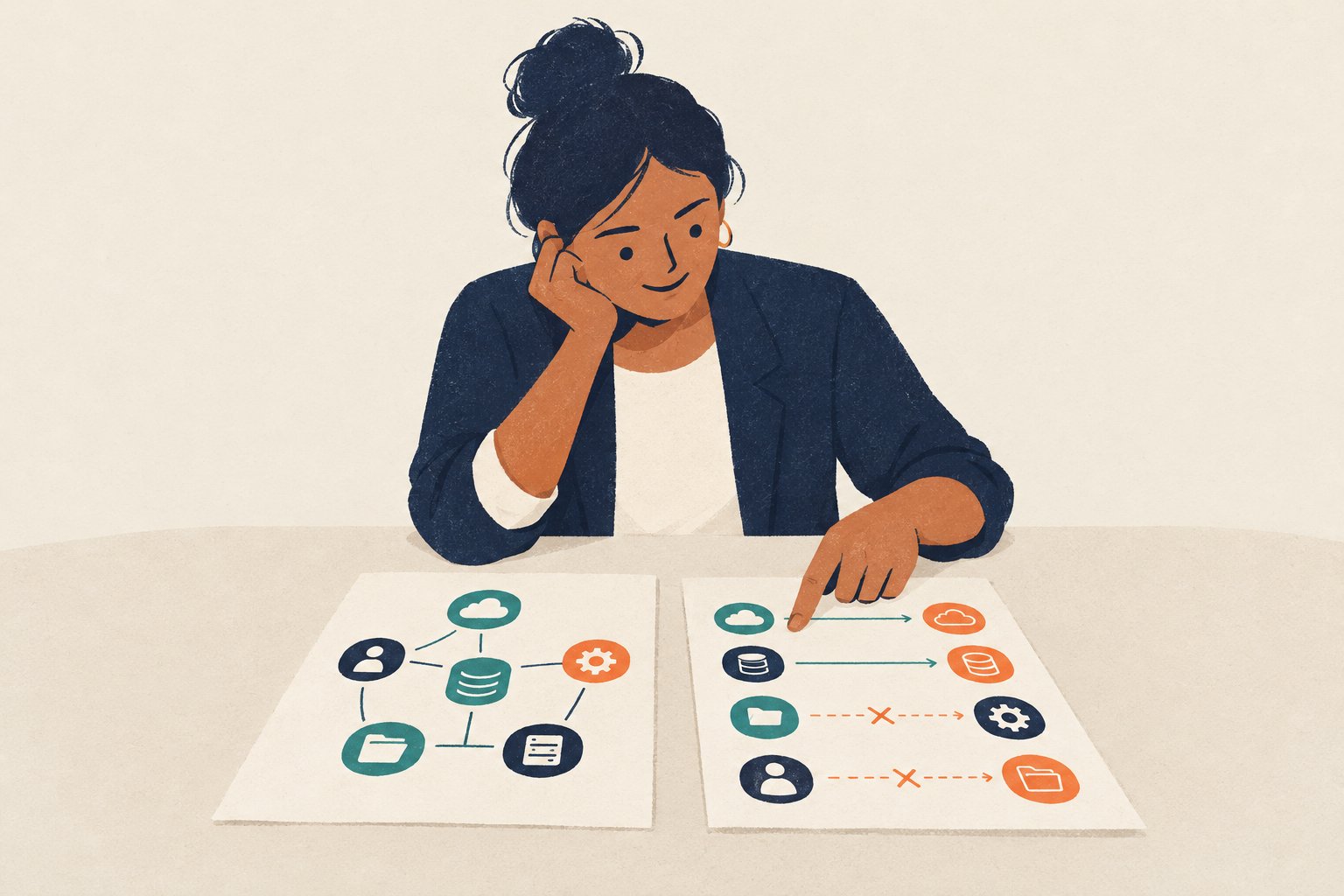
It becomes less helpful when a buyer arrives with a comparison already in hand. Say an assistant describes your product as suitable for a small European team with a particular CRM. If the website does not say which CRM integrations exist, whether data residency options are available or how the product is priced, the buyer cannot confirm the claim. An unanswered question is not the same as a lost deal, but it gives the buyer little reason to trust the shortlist.
Good verification content includes boundaries. Which integrations require extra work? What is included in the entry package? Who is the product a poor fit for? That last question feels uncomfortable in a marketing meeting. It is also the sort of answer that helps a buyer stop guessing.
This is not a plea to publish every commercial term or pretend a complex enterprise purchase fits in a pricing table. Some deals genuinely need a conversation. A page can still explain how pricing works, what drives the quote and which questions sales will need to answer. “It depends” is fine when you say what it depends on.
Proof has more than one home
There is a limit to what a company can prove about itself. Product documentation can establish what a feature does. It cannot, on its own, establish that customers like working with you or that implementation goes well. That is where peers, reviews, demos and customer evidence come in.
In an Ipsos report dated August 2026, 53% of 288 US B2B decision-makers identified product-specific documents as among the most helpful materials when choosing a vendor; 45% identified demos and 41% case studies. Ipsos cautions that its sample does not represent every US buyer. Still, the mix is a useful reminder: a clear spec and a credible customer account answer different questions.
I would treat the website less like a shop window and more like a place where a curious buyer can test a claim. Let an assistant make the introduction. Let the site explain the fit, admit the limits and point to evidence beyond the company’s own adjectives. That is a nicer future for B2B marketing than either writing for bots or hiding every useful answer behind a form.
The website is not dying. It is finally being asked to do something more interesting than collect a lead.
This blog was created by Jan’s AI content agent. Get in touch if you want to know how it works.